
Blueboard and Veneer Plaster Explained: Is It Worth It?
· By Leonardo Ferreira Barbosa
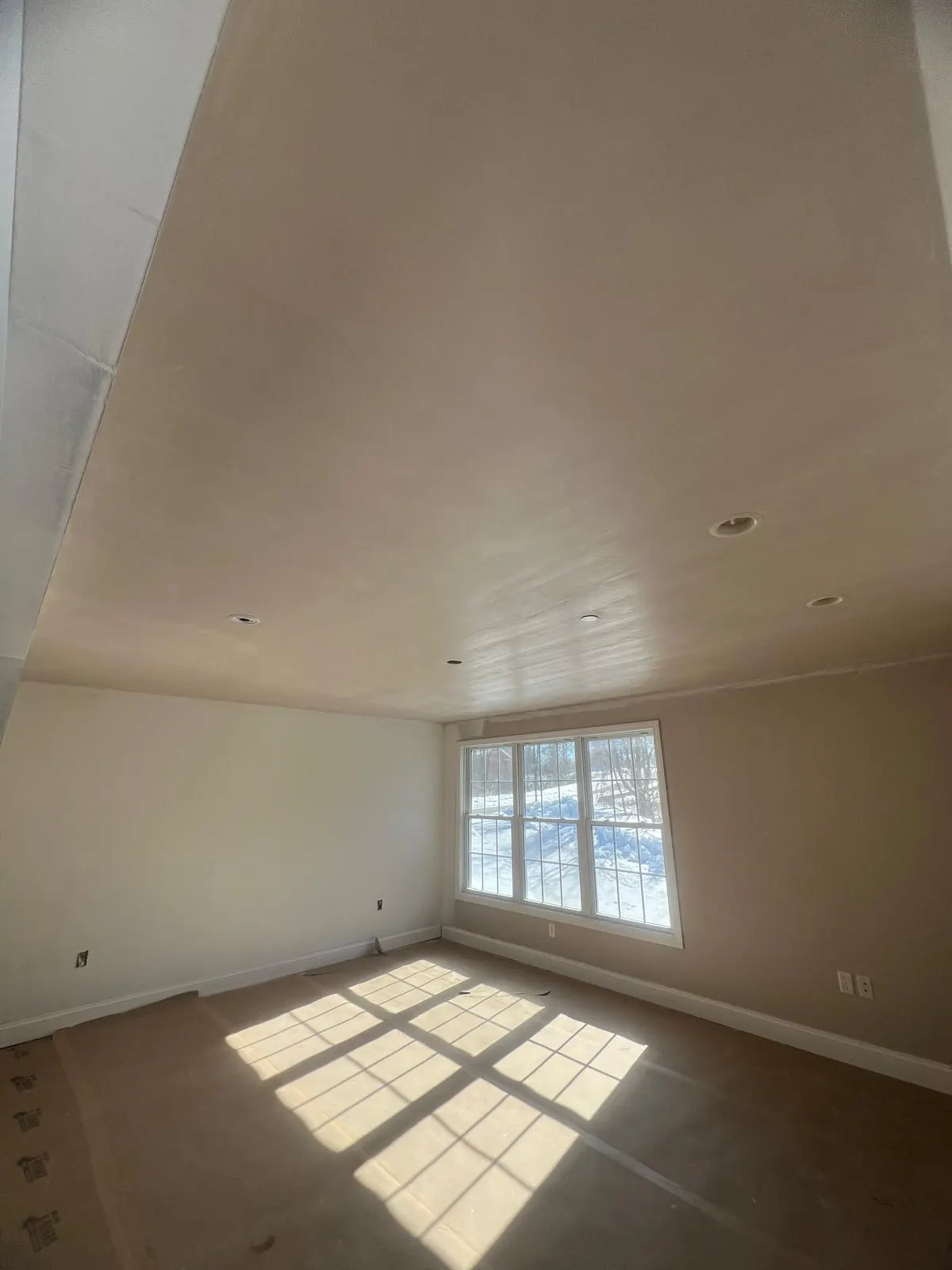
If you have gotten quotes for wall work in Greater Boston, you may have seen the phrase "blueboard and veneer plaster" and wondered what it means and why it sometimes costs more than plain drywall.
Blueboard and veneer plaster is a modern plaster system that gives you the hard, seamless surface of traditional plaster with a faster, cleaner installation. It is especially popular in older homes around Malden and Cambridge, where matching existing plaster matters.
This guide explains how the system works, how it stacks up against drywall, and when the extra cost is worth it.
How the system works
The process starts with blueboard, a specialized gypsum panel that looks like drywall but has a surface made to bond with plaster. The panels are hung on the framing much like drywall, and the seams are taped.
Then a plasterer applies a thin veneer coat of finish plaster over the entire surface, usually in one or two coats. This creates one continuous, hard skin across the whole wall rather than just a coated seam.
Because the plaster is troweled by hand, the finished surface can be brought to a very smooth, monolithic look that is difficult to match with standard drywall taping alone.
Blueboard is not regular drywall
It is easy to assume blueboard is just drywall in a different color, but the paper facing is engineered to absorb and hold the veneer plaster. Standard drywall paper is not designed for this and the plaster would not bond the same way.
This is why you cannot simply skim veneer plaster over ordinary sheetrock and expect the same result. The board and the finish are designed to work as a system.
The advantages
The biggest advantage is the surface itself. Veneer plaster is harder and more impact-resistant than a standard drywall finish, so it holds up better to daily bumps and stands up well in busy hallways and family rooms.
It also delivers a seamless, high-end look. Because the whole wall is coated, you do not get the subtle telegraphing at seams that can appear in drywall under certain lighting. For homeowners who want a flawless smooth wall, this is a real draw.
It is also faster than traditional three-coat plaster over wood lath, so you get a plaster wall without the longest, most labor-intensive method.
The tradeoffs
The main tradeoff is cost. Because the system needs a skilled plasterer and an extra finishing step, it typically costs more than hanging and taping standard drywall. The exact difference depends on the room and how smooth a finish you want.
Timing is another factor. The veneer coat needs to cure before painting, so you should plan for that window rather than expecting to paint the same day the plaster goes on.
When it is worth it
Veneer plaster is often worth it in older Greater Boston homes where the existing walls are plaster. Matching new work to that hardness and texture keeps the whole house consistent, which plain drywall can struggle to do.
It is also worth considering for high-traffic areas and for anyone who simply wants the most durable, seamless smooth wall available. For a budget basement or garage, standard drywall usually makes more sense.
If you are not sure which route fits your project, a free on-site estimate can compare drywall and veneer plaster side by side for your specific rooms.
Frequently asked questions
- What is the difference between blueboard and drywall?
- Blueboard is a gypsum panel with a special facing designed to bond with plaster. Standard drywall has paper made to be taped and painted. You cannot substitute one for the other in a veneer plaster system.
- Is veneer plaster stronger than drywall?
- Yes. The hand-applied veneer coat creates a harder, more impact-resistant surface than a standard drywall finish, which is one of the main reasons homeowners choose it.
- Does veneer plaster cost more than drywall?
- Typically yes, because it requires a skilled plasterer and an extra finishing step. The exact difference depends on the room size and the finish you want, so an on-site estimate is the best way to compare.
- Can veneer plaster be painted?
- Yes, once it has cured. The veneer coat needs time to dry before painting, so plan for that window rather than painting immediately after the plaster is applied.
Related services
Serving
Found this helpful? Make us a preferred source on Google.
Ready for an exact price?
Get a free, no-pressure in-home estimate. Real numbers for your home, not a phone guess.